Our CEO Visits Shenzhen, China
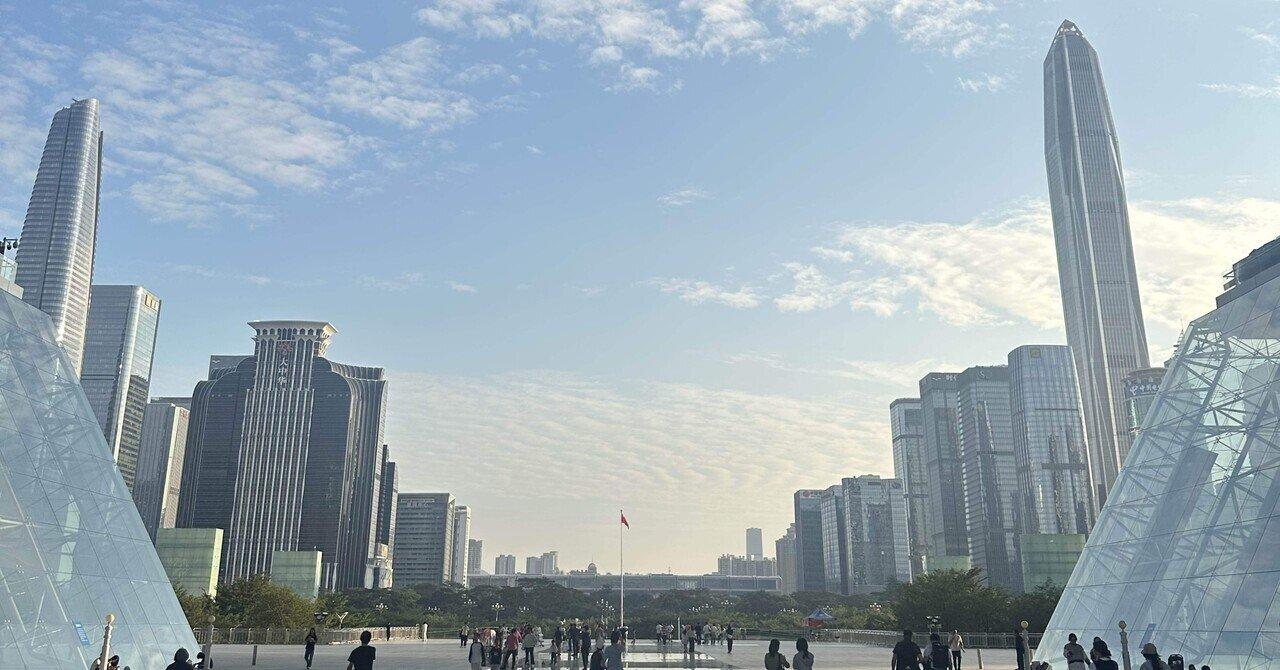
Hotaka Funahashi, CEO of Universal Pine Inc., visited Shenzhen, China, for seven days and six nights from November 13 (Thu) to 19 (Wed), 2025. As we develop the wearable AI device "Wiz," the aim was to see with our own eyes what is happening in Shenzhen, the center of the world's hardware industry. During the stay he visited dozens of places in Shenzhen and Guangzhou and tried dozens of services for himself.
What prompted the visit
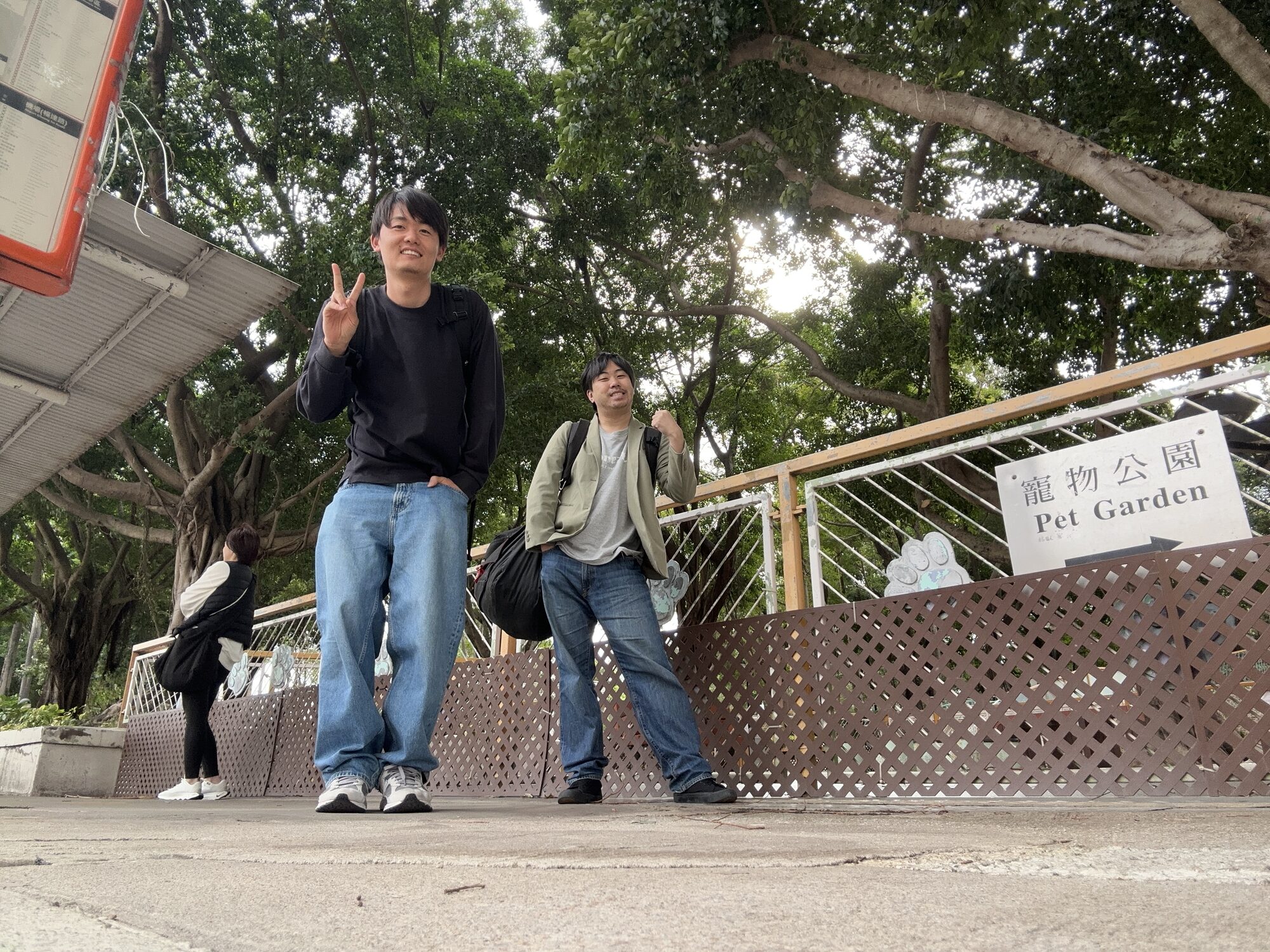
The immediate reason for the trip was M5Stack Open Day, an event that microcontroller module maker M5Stack holds every year at its Shenzhen headquarters. Funahashi entered China via Hong Kong together with Riti, an engineer he had met at an event, and explored the city from a base in Huaqiangbei, the district known for its electronics markets.
Touring M5Stack's headquarters and factory
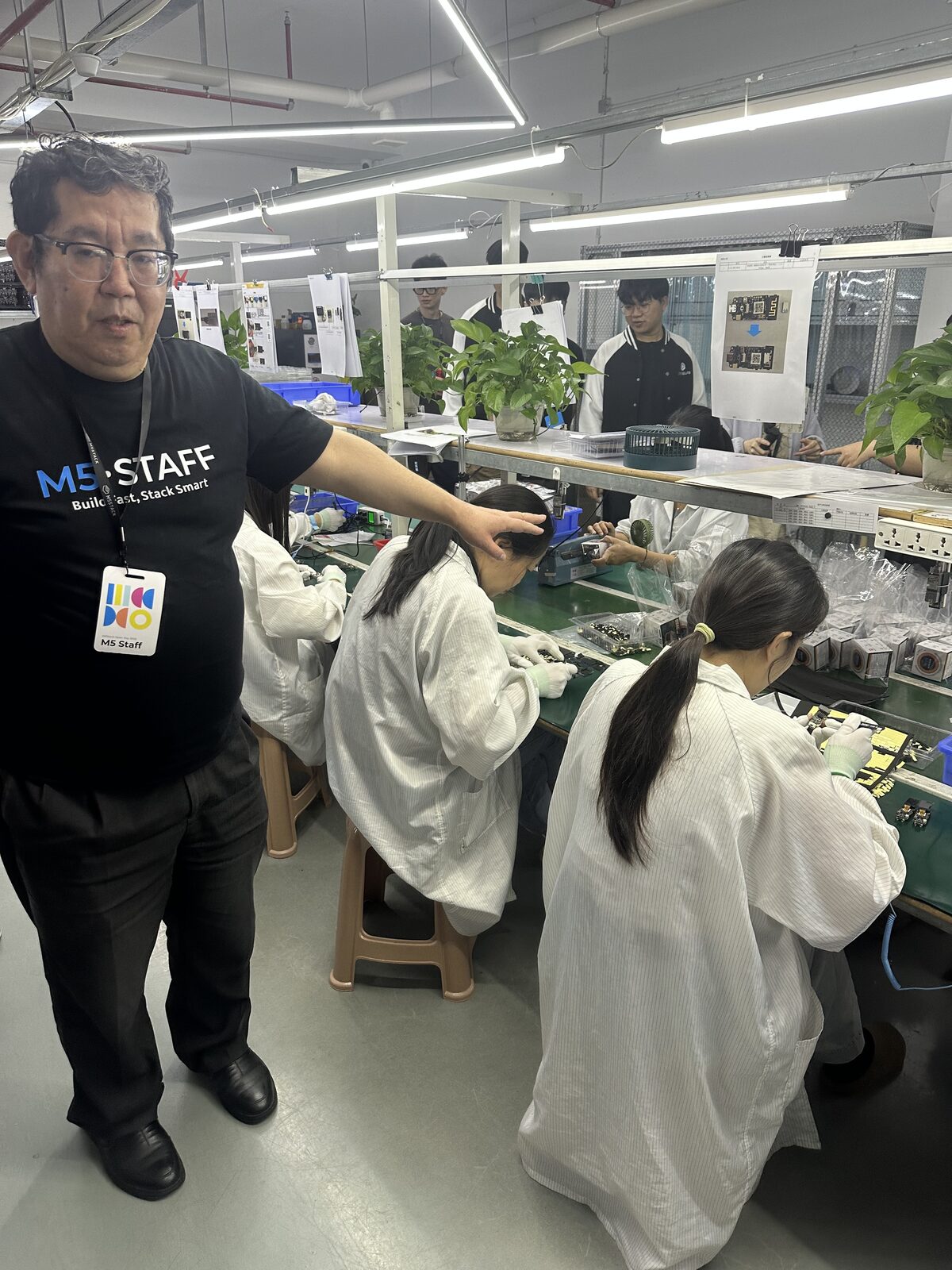
At M5Stack Open Day 2025, held on November 17, he toured the headquarters and the factory in its basement, seeing up close how everything from design to assembly and shipping takes place within a single building. Discovering that many of the products are assembled by hand was a surprise.
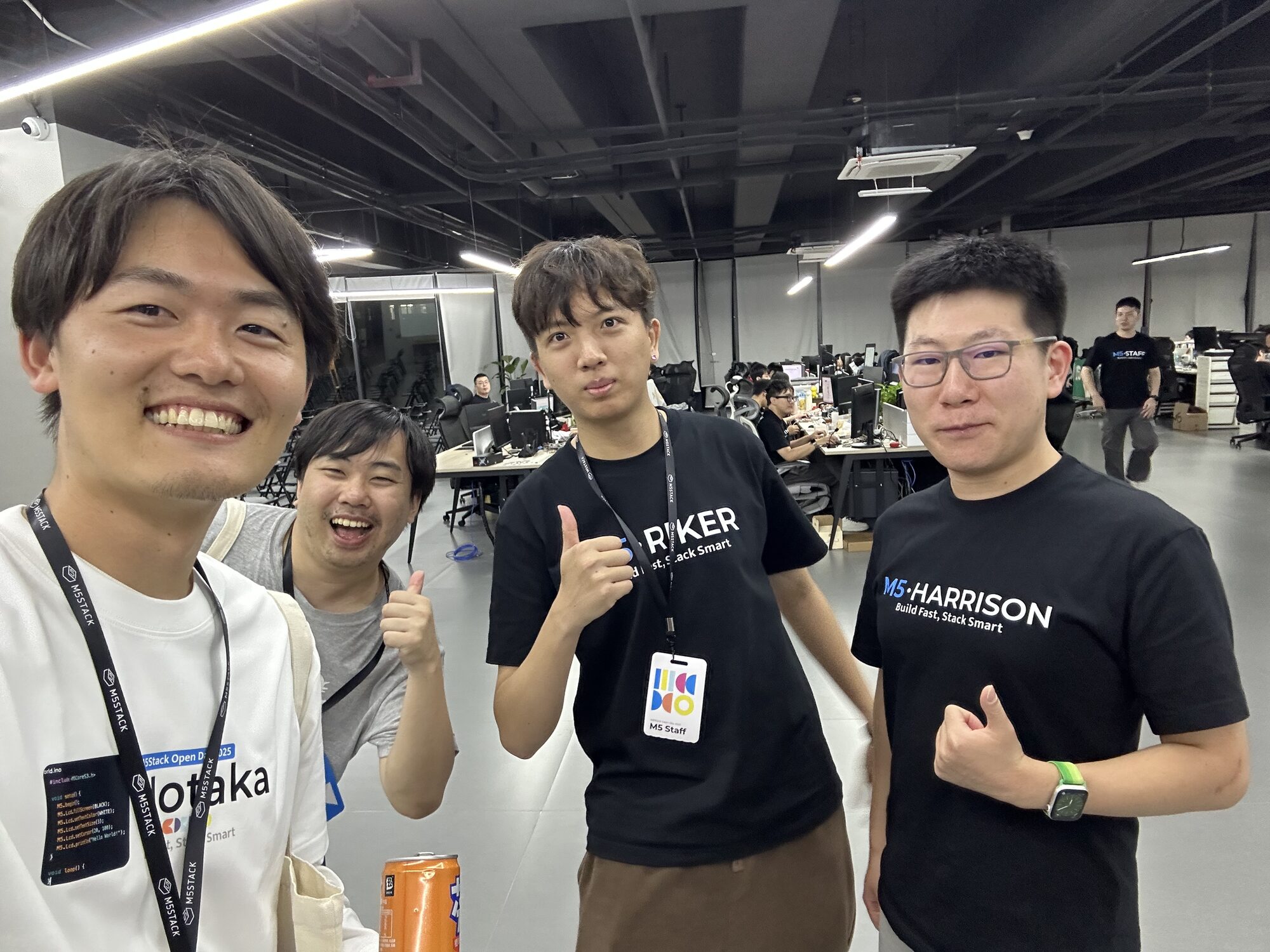
After opening remarks from CEO Jimmy Lai and a round of lightning talks, a networking session followed. There he spent about two hours with local engineers, exchanging views on how they use AI, how long development takes, which CAD tools they use, and how they work.
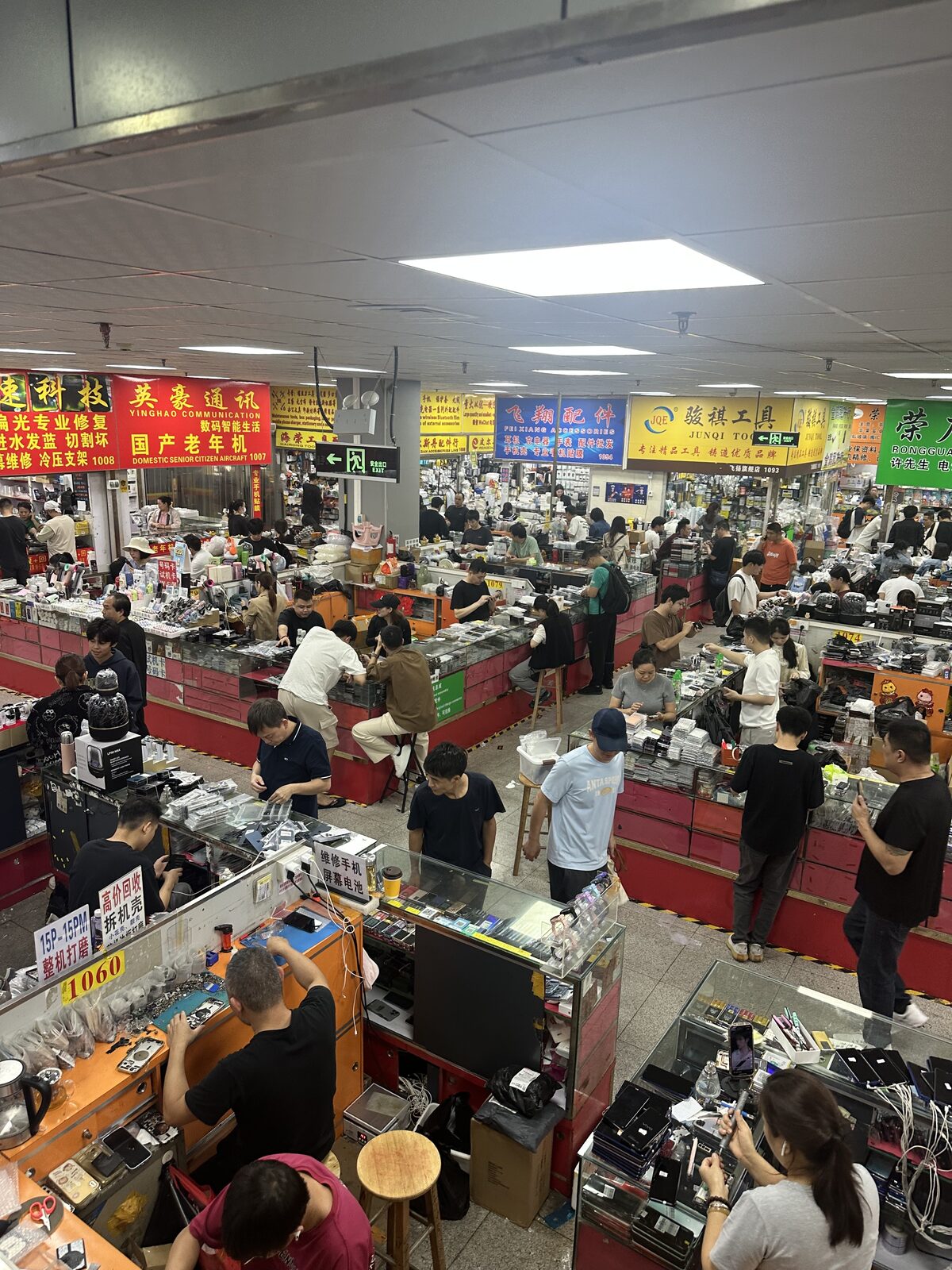
At the component markets of Huaqiangbei, electronic parts were on sale for just a few yen per hundred pieces, a price level that brought home once again how strong Shenzhen is as a place to build hardware.
A high-tech fair and Maker Faire
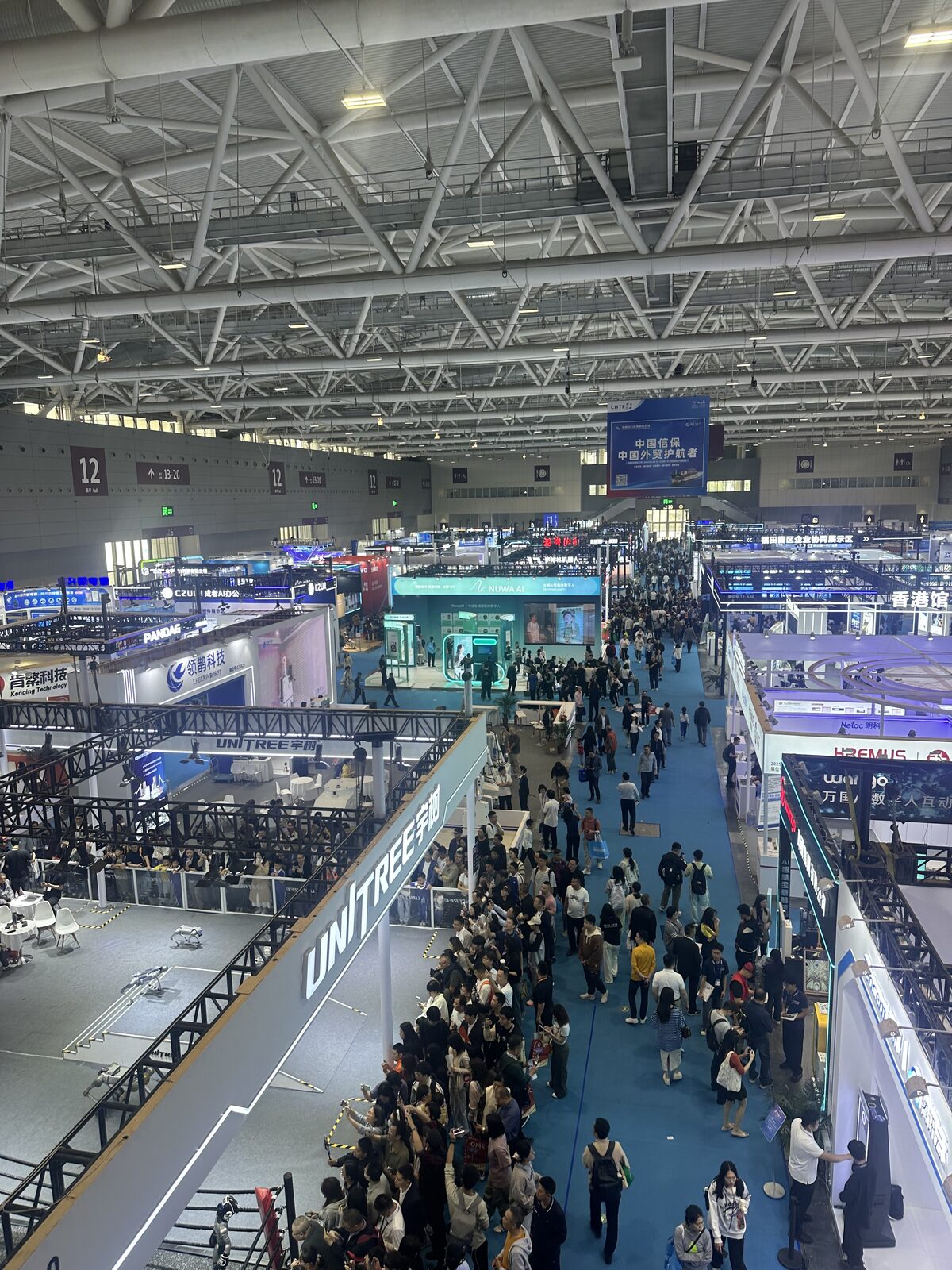
At the China Hi-Tech Fair 2025, held November 14–16 at the Shenzhen World Exhibition & Convention Center, he walked through exhibits spanning AI, robotics, IoT, semiconductors, space, and energy. Working machines were everywhere: Unitree's boxing robots and backflipping quadrupeds, humanoids that change facial expressions, robots playing musical instruments, a two-seater drone, and more.
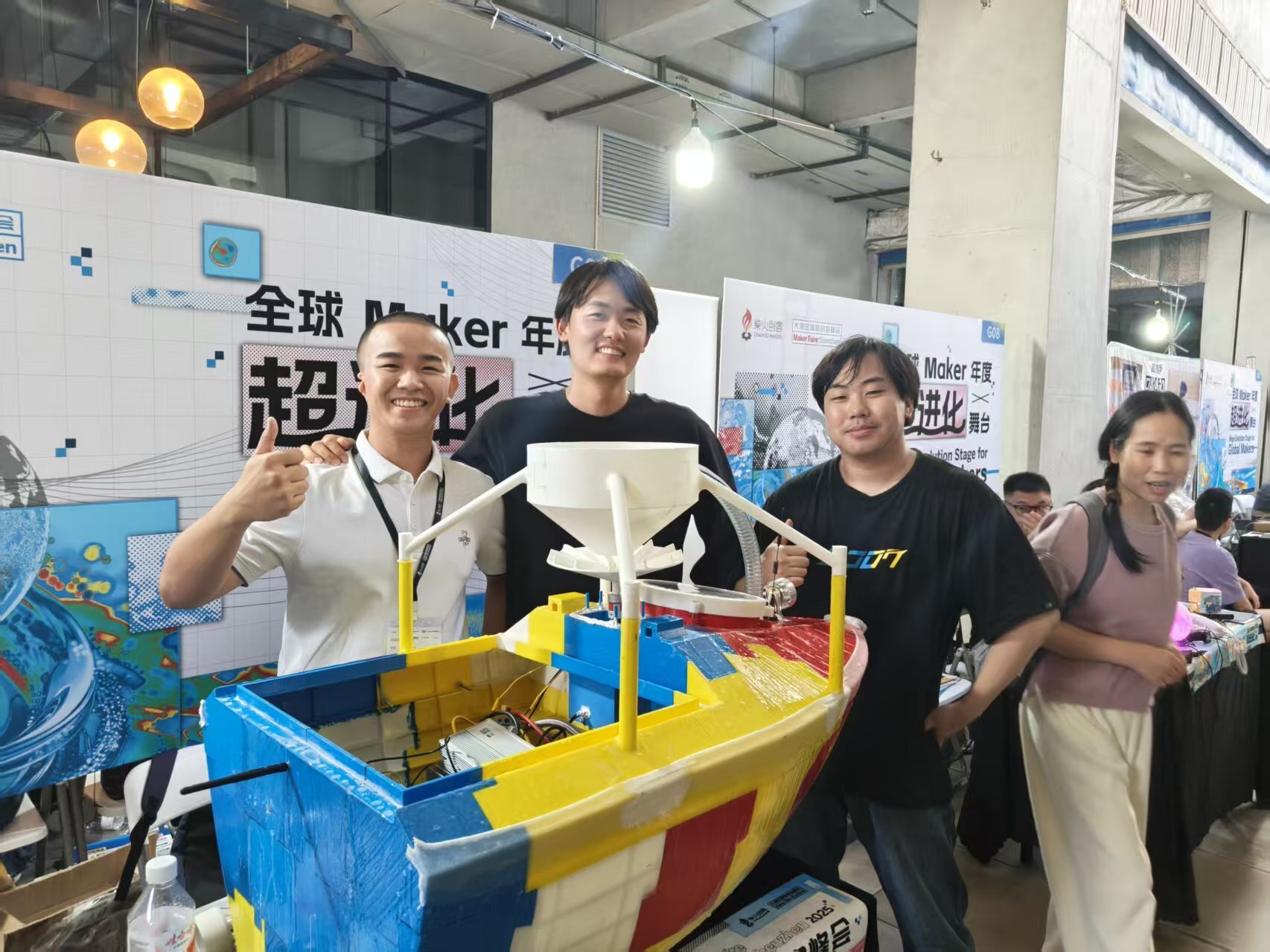
At Maker Faire Shenzhen, held around the same time, the exhibitors included not only individuals and companies but high school students as well, a sign of how deeply the culture of making electronics has taken root among the younger generation.
Experiences around the city
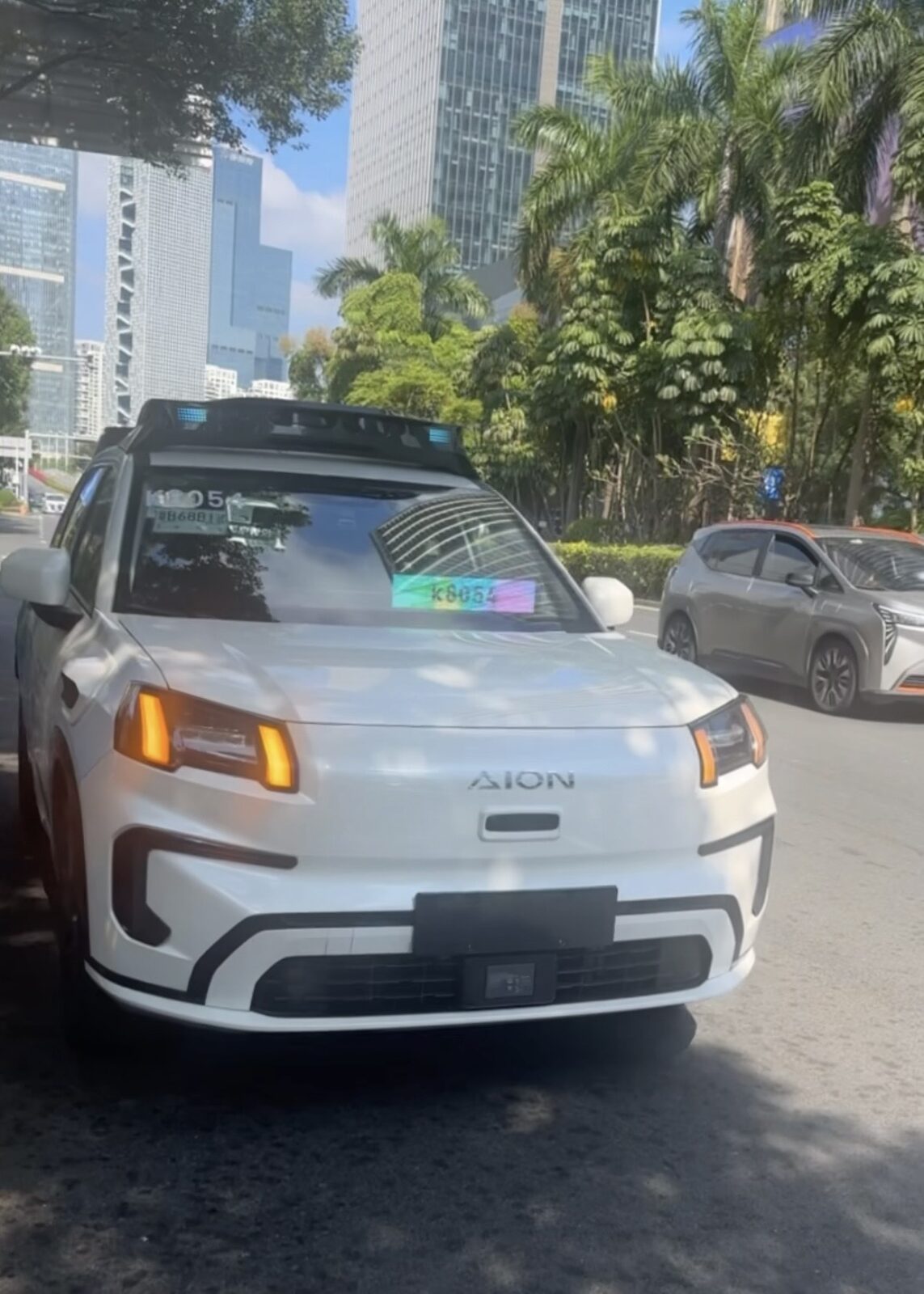
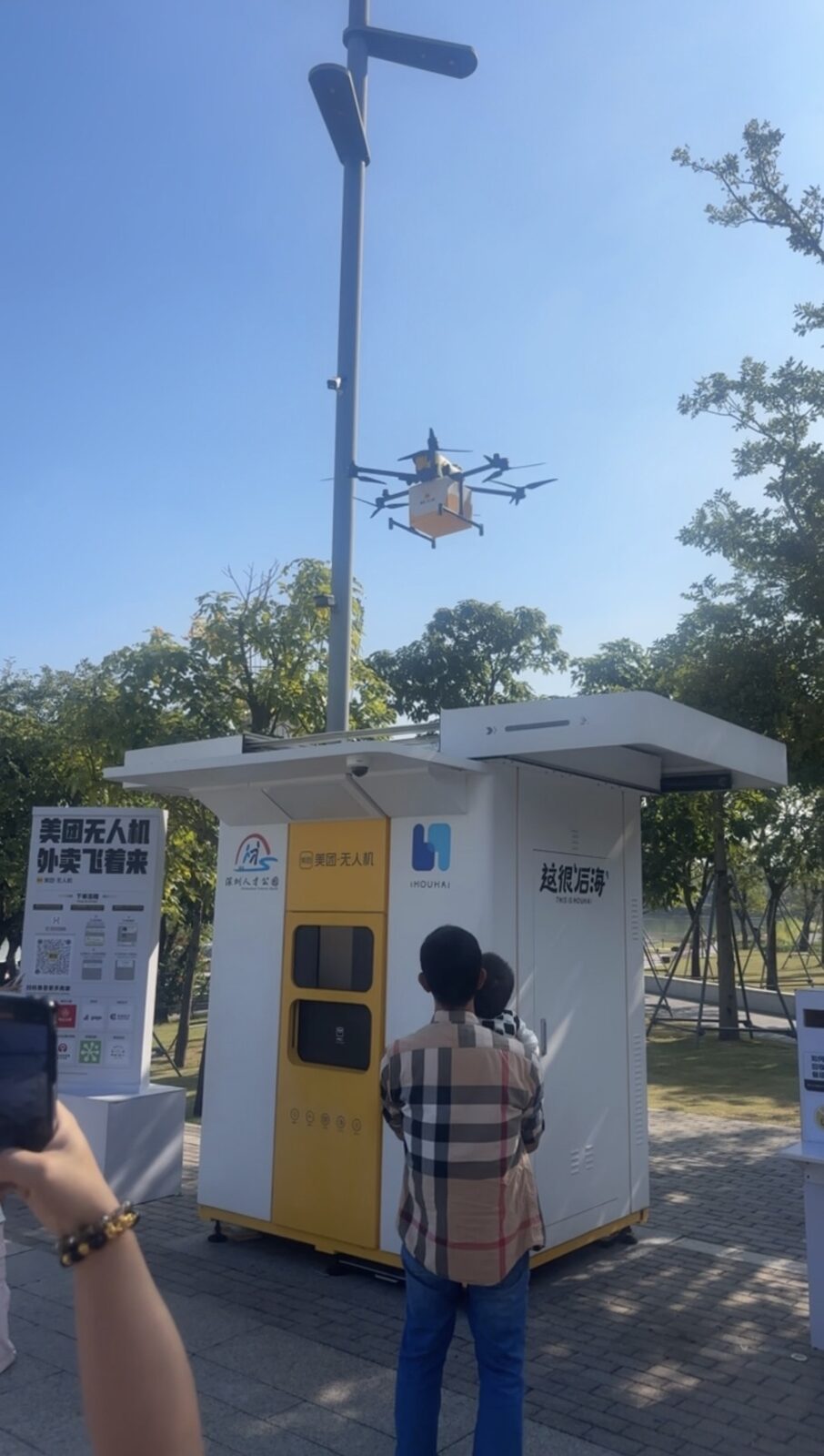
Around the city, he experienced as an ordinary user cutting-edge technologies that are still at the trial stage in Japan. A Pony.ai robotaxi drove through city streets with no one in the driver's seat, and from hailing it in the app to getting out, the ride felt no different from a regular taxi. At Shenzhen Talent Park he ordered a Meituan drone delivery and watched the drone fly in overhead and drop the meal at a dedicated pickup station. Shared bicycles, vending machines built around QR code payments, and other services that take cashless payment for granted were simply part of everyday life.
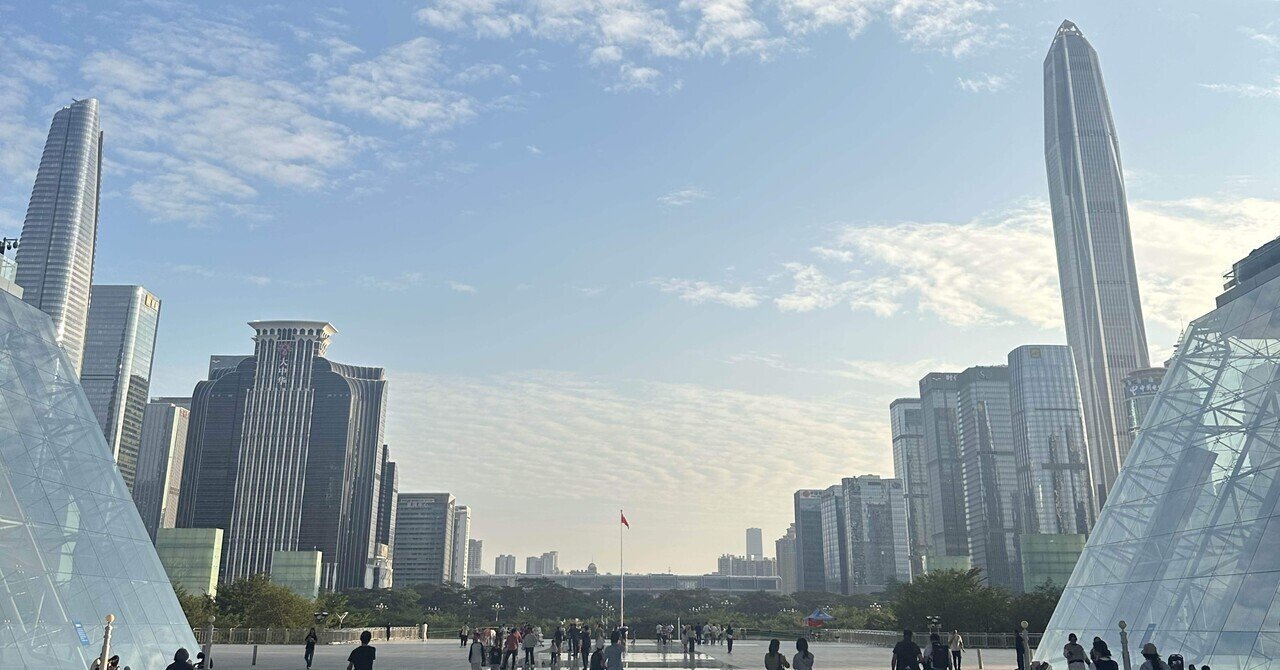
He also visited the headquarters of Huawei and Foxconn, the offices of Xiaomi, Huawei, and Tencent, the Shenzhen Science & Technology Museum designed by Zaha Hadid Architects, and the roughly 600-meter-tall Ping An Finance Centre. At the Shenzhen Museum he traced the city's transformation from a fishing village into a metropolis. One day was spent on a day trip to Guangzhou by high-speed rail.
Looking back on the visit
Cashless payments, electric scooters, autonomous driving, drone delivery: much of what Japan is still working toward is already part of daily life in Shenzhen. There was also a great deal to learn about bringing an AI device to market as a product, from how close design sits to manufacturing to the attention to design found throughout the city. We will put the connections and insights gained on this visit to work in the development and mass production of Wiz.
Funahashi has written a detailed account of the trip on note: "Seeing All of Cutting-Edge Shenzhen, China: A Seriously Intense Trip!"
Visit overview
- Dates: November 13 (Thu) – 19 (Wed), 2025 (seven days, six nights)
- Destination: Shenzhen, China (with a day trip to Guangzhou)
- Main places visited: M5Stack Open Day 2025 (November 17, M5Stack headquarters), China Hi-Tech Fair 2025 (November 14–16, Shenzhen World Exhibition & Convention Center), Maker Faire Shenzhen, the Huaqiangbei electronics district, Huawei headquarters, Shenzhen Science & Technology Museum, Shenzhen Museum, Ping An Finance Centre
- Technologies experienced: Pony.ai robotaxi, Meituan drone delivery, shared bicycles, QR code payments
- note: "Seeing All of Cutting-Edge Shenzhen, China: A Seriously Intense Trip!"
- M5Stack Open Day 2025 (official M5Stack blog, in English)